
When people think of hedgerows in the English countryside, the well-publicised loss of hedges in the post-war period often comes to mind. After WW2, there were around 1,000,000 miles of hedgerows; removal started in the 50s and by the 1990s, 10,000 miles a year were being grubbed out in the efforts to increase food production through the use of modern machinery and intensive farming methods. However, it’s not so widely known that most of this loss occurred outside the Weald of Kent and that we have, largely, retained the original network of hedges carved out of the Wealden Forests, first by Saxon and then medieval peasants or ‘freemen’, creating the ‘dens’ with which we are familiar. Indeed, the Weald of Kent is recognised as one of the best preserved medieval landscapes in Northern Europe! In Marden, we can search for evidence of hedgerows using old maps – the annotations on the 1842 Tithe Map, for example, show that the existing network is largely unchanged. Going back further would require delving into historical records – evidence from elsewhere indicates the existence of hedgerows over 1,000 years ago!
Wealden hedgerows are special, not only because they are incredibly old and tell a fascinating story of social and economic change, but also because they define our landscape and provide a unique and irreplaceable refuge for wildlife, in a country where nature is under siege. Birds, mammals, invertebrates, reptiles and amphibians use them as places to forage and hunt, nest, roost, hide from predators and travel safely through the landscape. One study found over 2,000 species in an 85 metre stretch, and 80% of farmland birds rely on hedgerows. In the boggy Weald, they are often associated with ancient ditches and banks, which further enhance their wildlife value. The presence of hedgerow trees adds additional niches for wildlife to occupy.
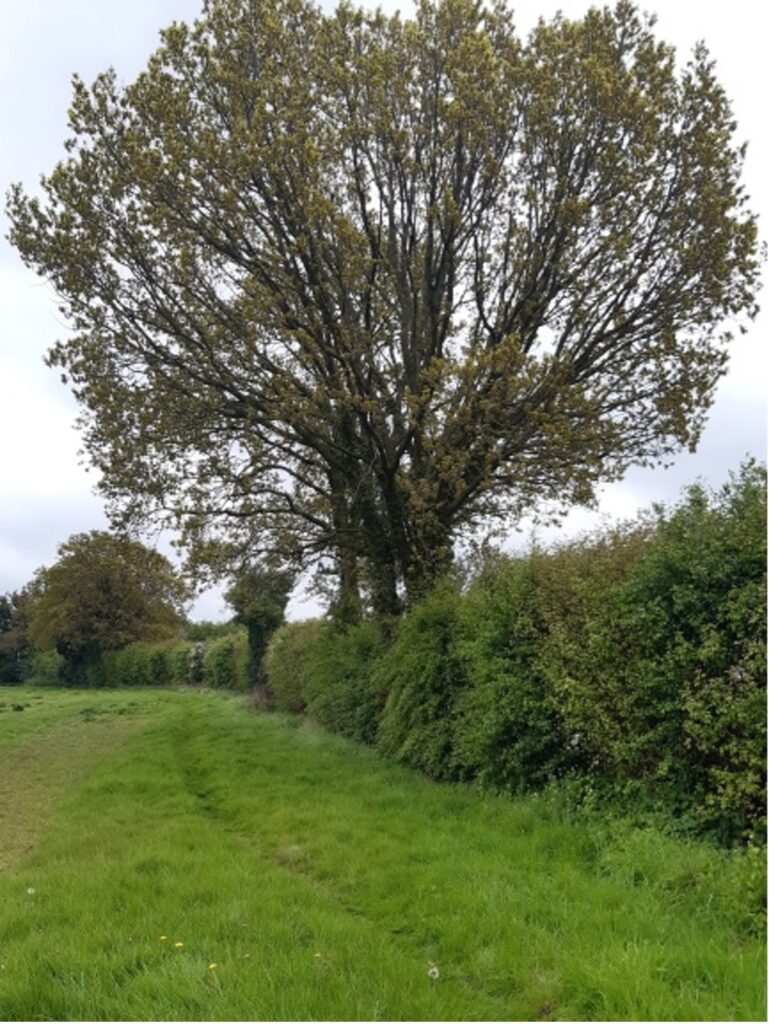
Wildlife friendly hedge with trees, Manor Farm
In the Weald and elsewhere, the main issue now is not so much the removal of hedges, but poor maintenance. This has led to a decline in the condition of many hedges – they are often over-trimmed, gappy and lacking in ground flora.
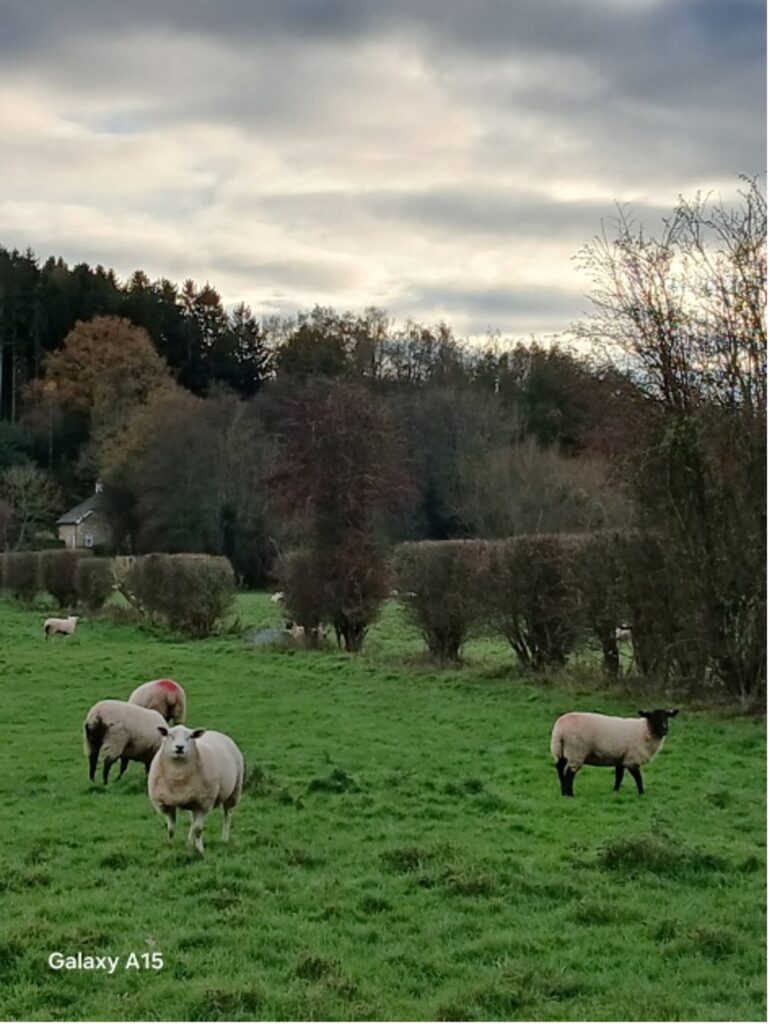
Poorly maintained, gappy hedge (Lamberhurst, not Marden!)
Cost is an issue – traditional rotational methods of hedge management, such as laying and coppicing, are labour intensive and farmers face harsh economic realities that discourage this type of management. Often, though, the issue is a lack of knowledge of how to keep a hedge intact. Trimming back to the same point each year, which many farmers do, encourages a ‘hard knuckle’ to form at the trim point, leading to below and removing the chance for shrubs to flower and set seed. This then reduces their value as a food source for wildlife. Ploughing right up to the hedge also reduces habitat value. Well managed hedges for wildlife are tall and wide, cut incrementally larger on a 2 or 3 year rotation, with wide margins and plenty of ground flora. Laying or coppicing after 15-20 years enables them to regrow as a dense barrier and start the cycle again. This enhances their utility to farmers too!
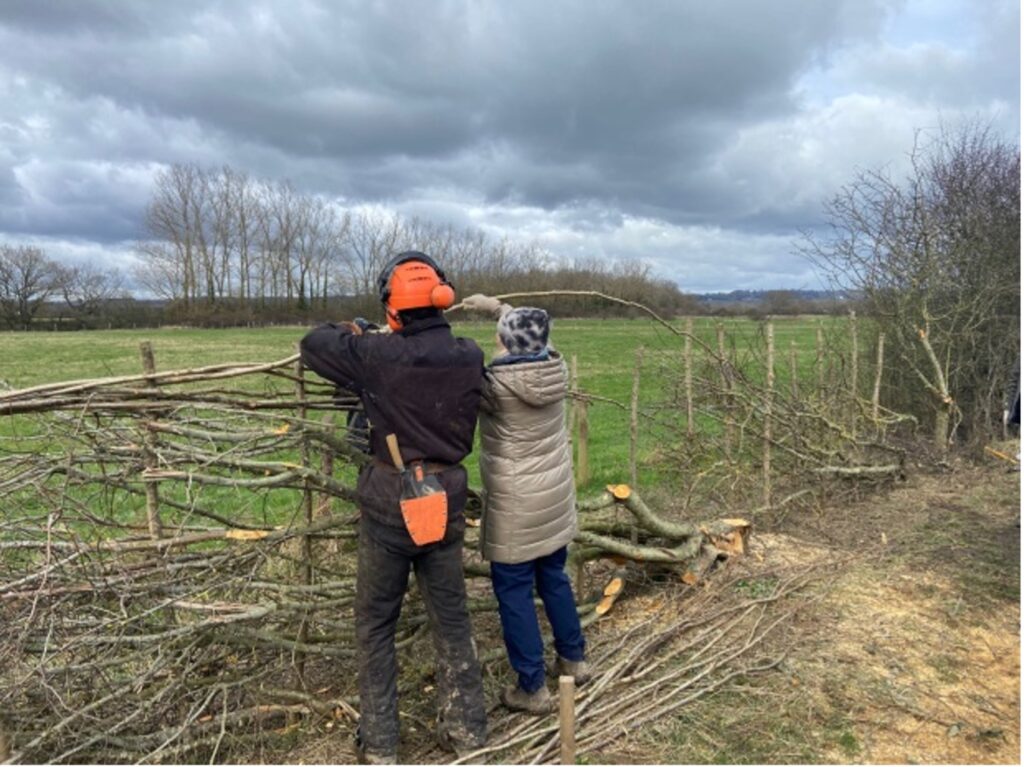
Hedge laying, Little Mill Farm, with the rejuvenating hedge eighteen months later
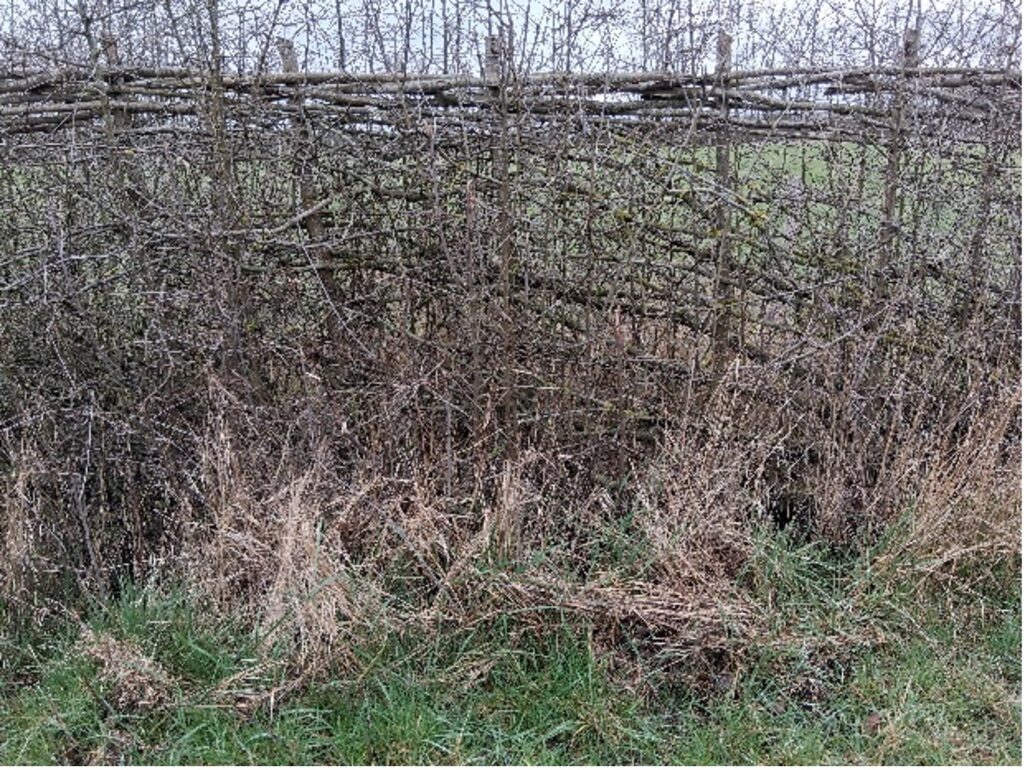
Hedge laying, Little Mill Farm, with the rejuvenating hedge eighteen months later
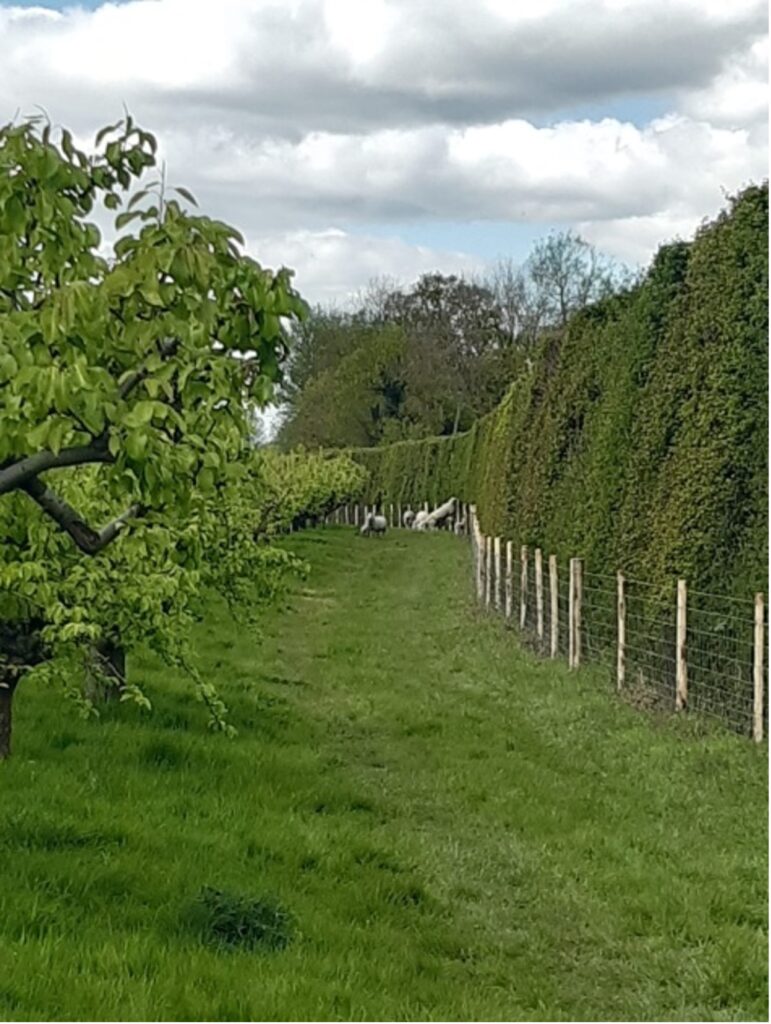
Recently trimmed, well managed hedge, Little Mill Farm
HEDGEROW SURVEY PROJECT
The Marden Hedgerow Survey Project aims to find out more about the precious hedgerow heritage we have in Marden. The project started in 2023 and consists of a committed band of volunteers who are enthusiastically surveying hedges using a method devised by the People’s Trust for Endangered Species (PTES) (see https://ptes.org/hedgerow/ for the Great British Hedgerow Survey Method and lots of fascinating facts about hedgerows).
We’ve started our work at two farms in the Wildlife Cluster – Little Mill and Manor Farms. Both farmers are wildlife enthusiasts and embrace wildlife-friendly farming. The survey is designed to score hedgerows for their ‘wildlife value’, focusing on 3 main criteria – biodiversity, structure and connectivity (links to other hedges and woodland). Data is collected in the field and recorded on a national database. A ‘management plan’ for each hedge is generated and can be used to apply for grants available under the Sustainable Farming Initiative. Volunteers are amateurs, the survey techniques are simple to learn, and we always work as a group, which makes the whole exercise very sociable and fun, interspersed with some very serious debates about species dominance and hedgerow gappy-ness!!
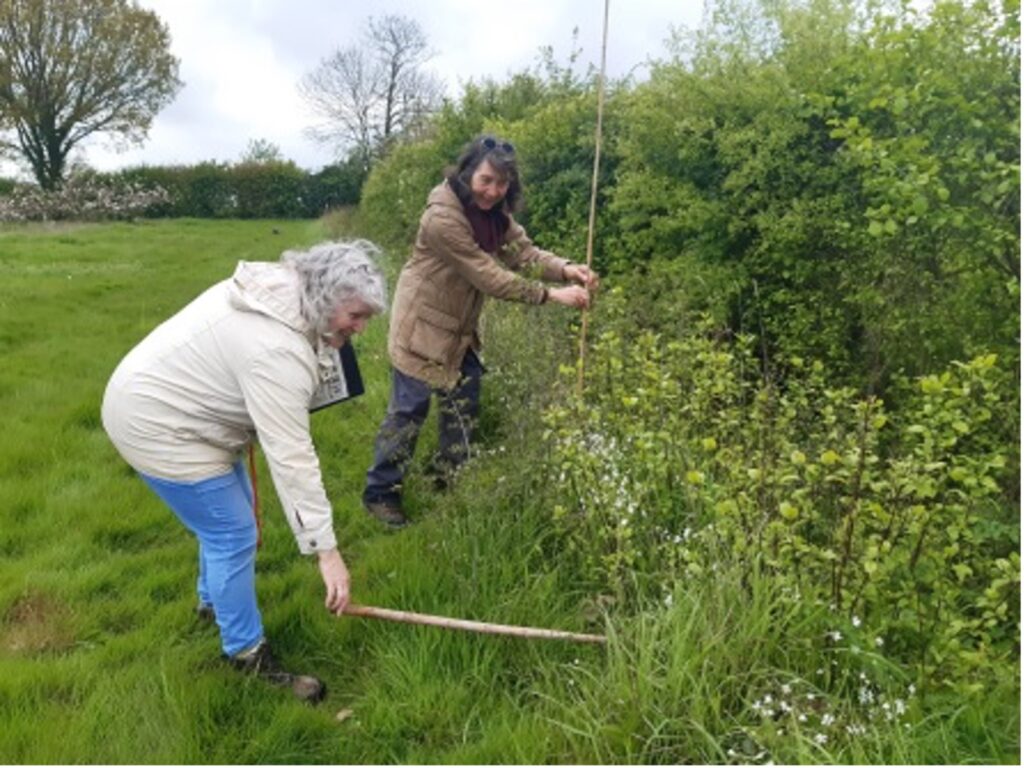
Taking hedgerow measurements, Manor Farm
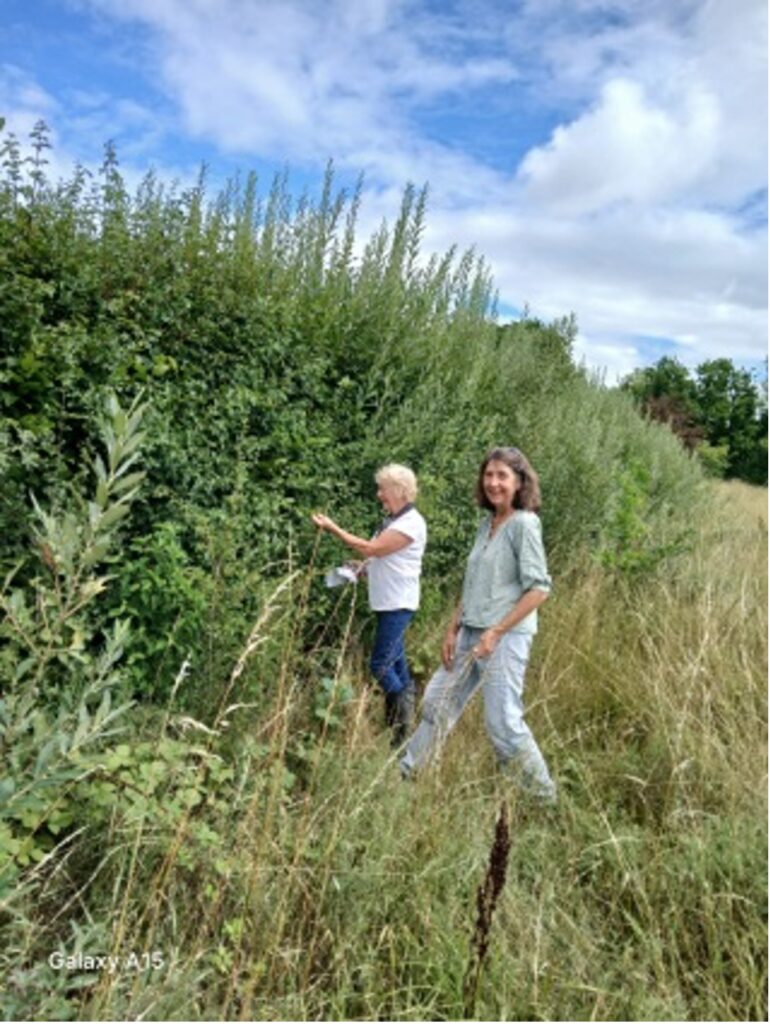
Shrub ID work, yellowhammer friendly hedge, Little Mill Farm
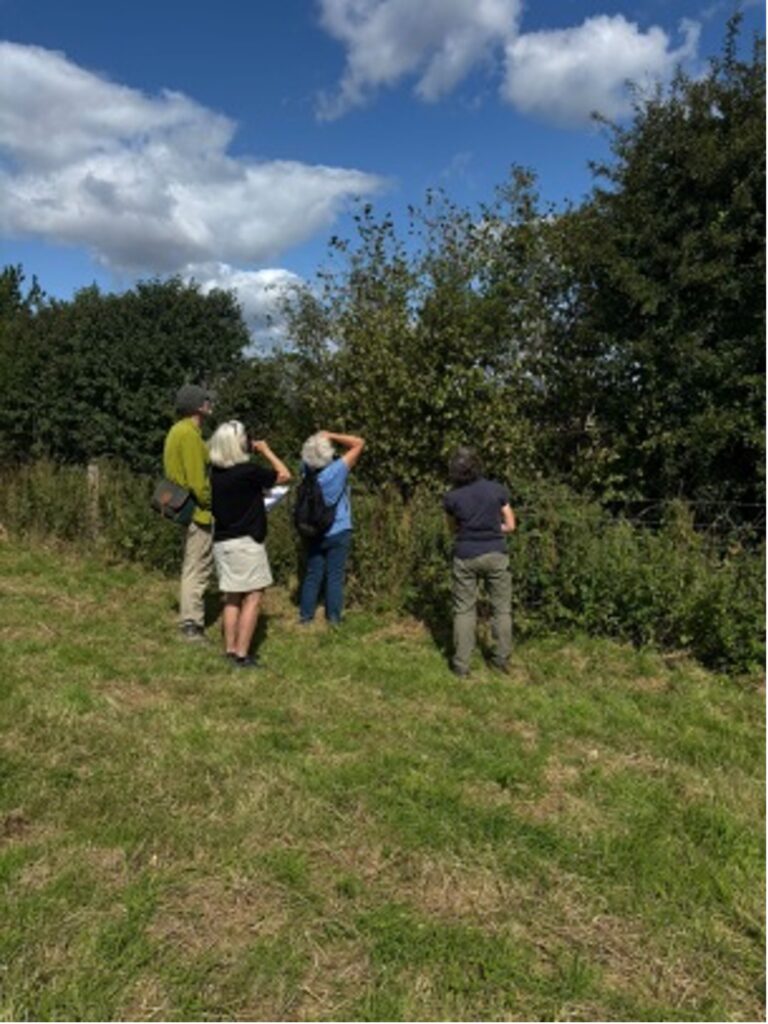
When is a hedge not a hedge? Manor Farm
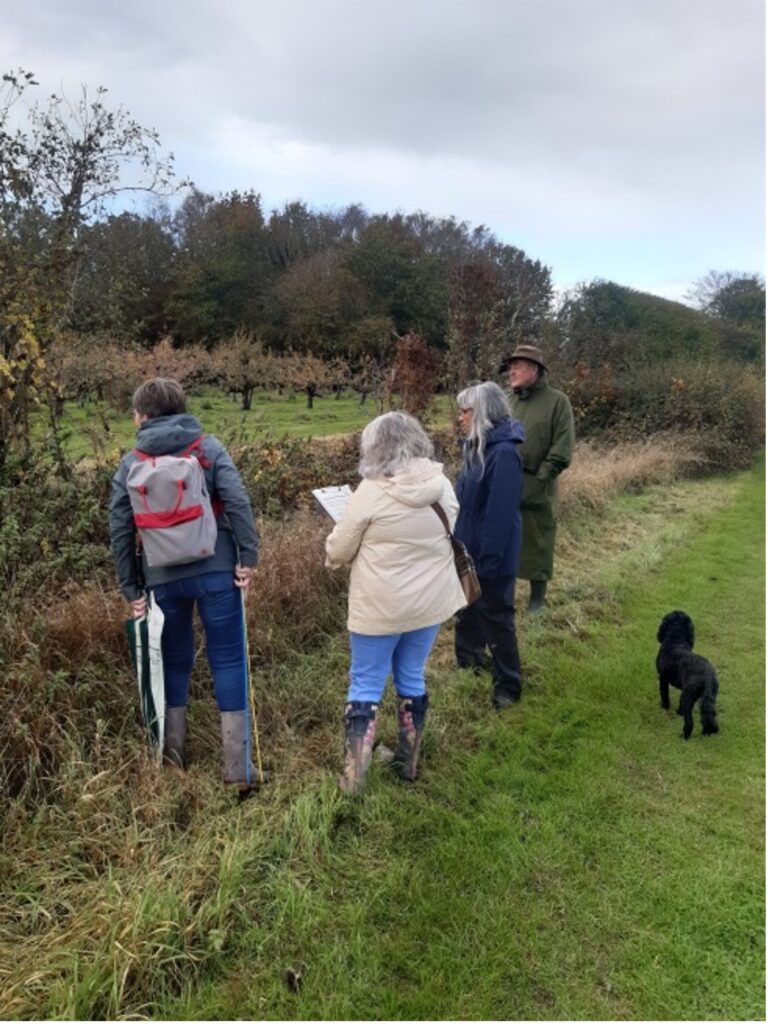
Inspecting hedgerow margins, Little Mill Farm
Our findings so far have been quite astounding! We’ve surveyed nearly 50 hedges and have found 27 shrub and tree species, an average of 6.4 per 30 metres (compared with the national figure of 3.6). Most prevalent are hawthorn, blackthorn and field maple, followed by hazel, oak, dogwood, willow and field rose. Rarer species found include wild service, spindle, hornbeam and English elm. Hedgerow tree species include oak, field maple, holly, ash, wild service and the occasional poplar. Marden has over 60% of the species listed on the national database, which indicates just how biodiverse our hedges are. We are not required to record ground flora, animals or invertebrates for the survey, but we do notice and record interesting findings. It’s a joy to spend time in Marden’s beautiful countryside and see areas not accessible to the public, as well as meet like-minded people.
GET INVOLVED
Please come and join our informal survey group. We start surveys in April and continue until September. Time commitment is as much as you wish to give. Survey sessions are scheduled on a range of days, lasting a couple of hours. By joining our WhatsApp group, you can sign up for sessions by poll. No special equipment or knowledge is needed. Contact Liz Taylor by email – ramshillhouse@btinternet.com
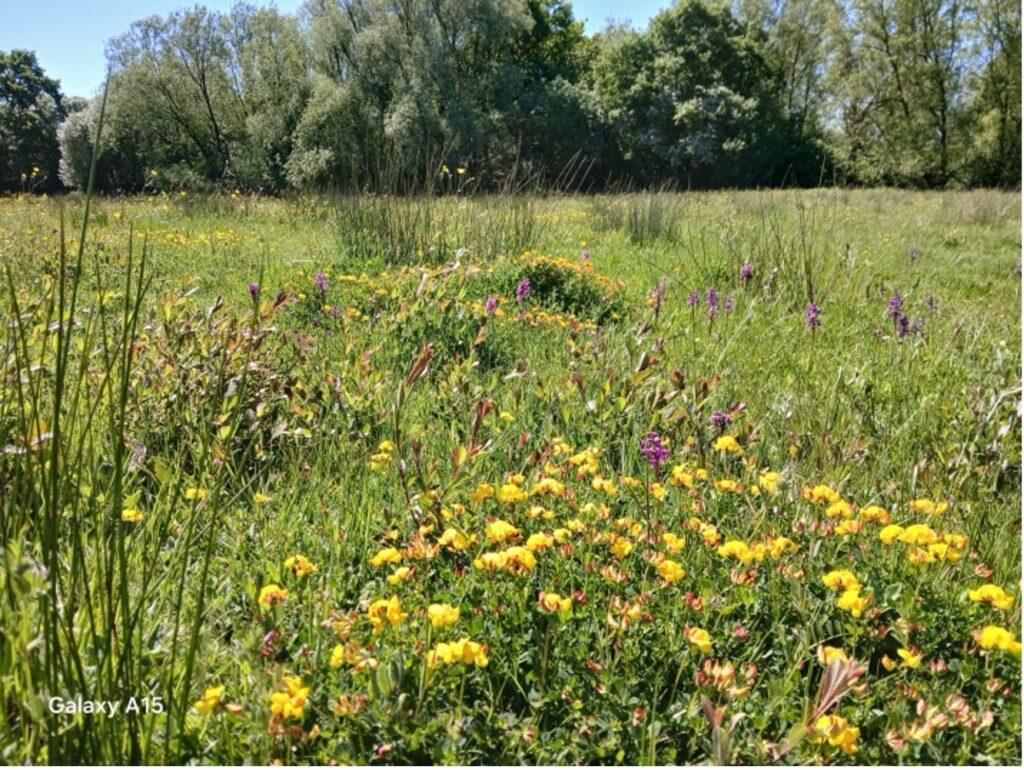
Flower rich meadow, Manor Farm
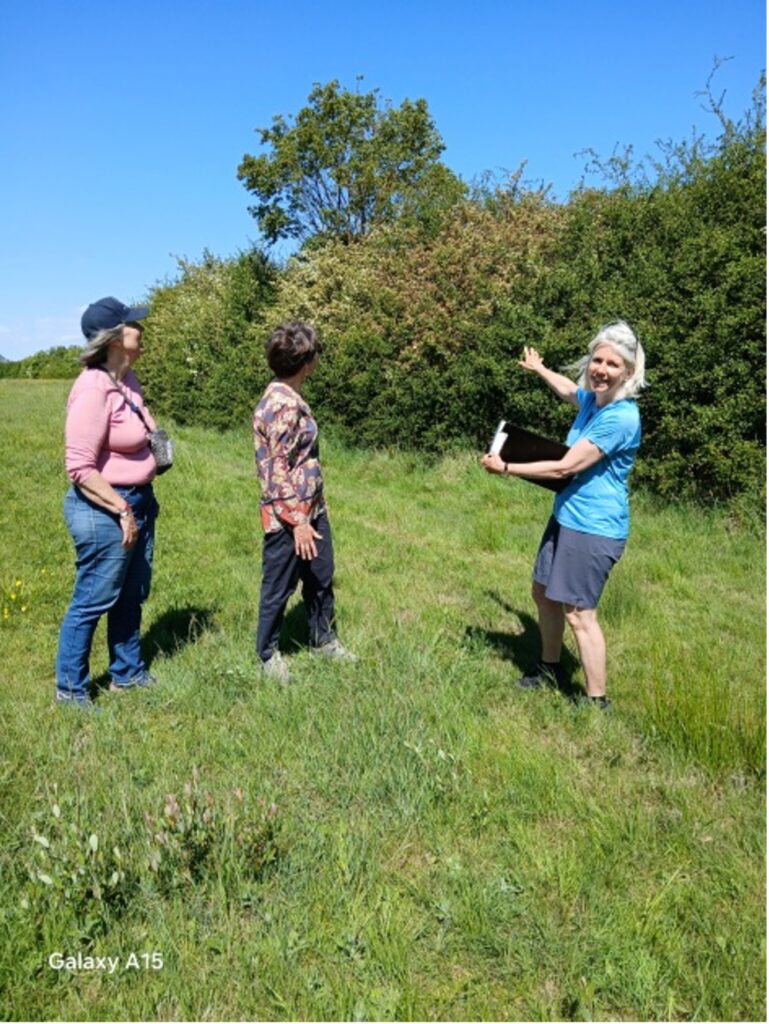
Admiring a wildlife friendly hedge, Manor Farm